Stroke Treatment
-
 By Dr. Rajat Agarwal
-
 July 13, 2026
Stroke Treatment in Haldwani
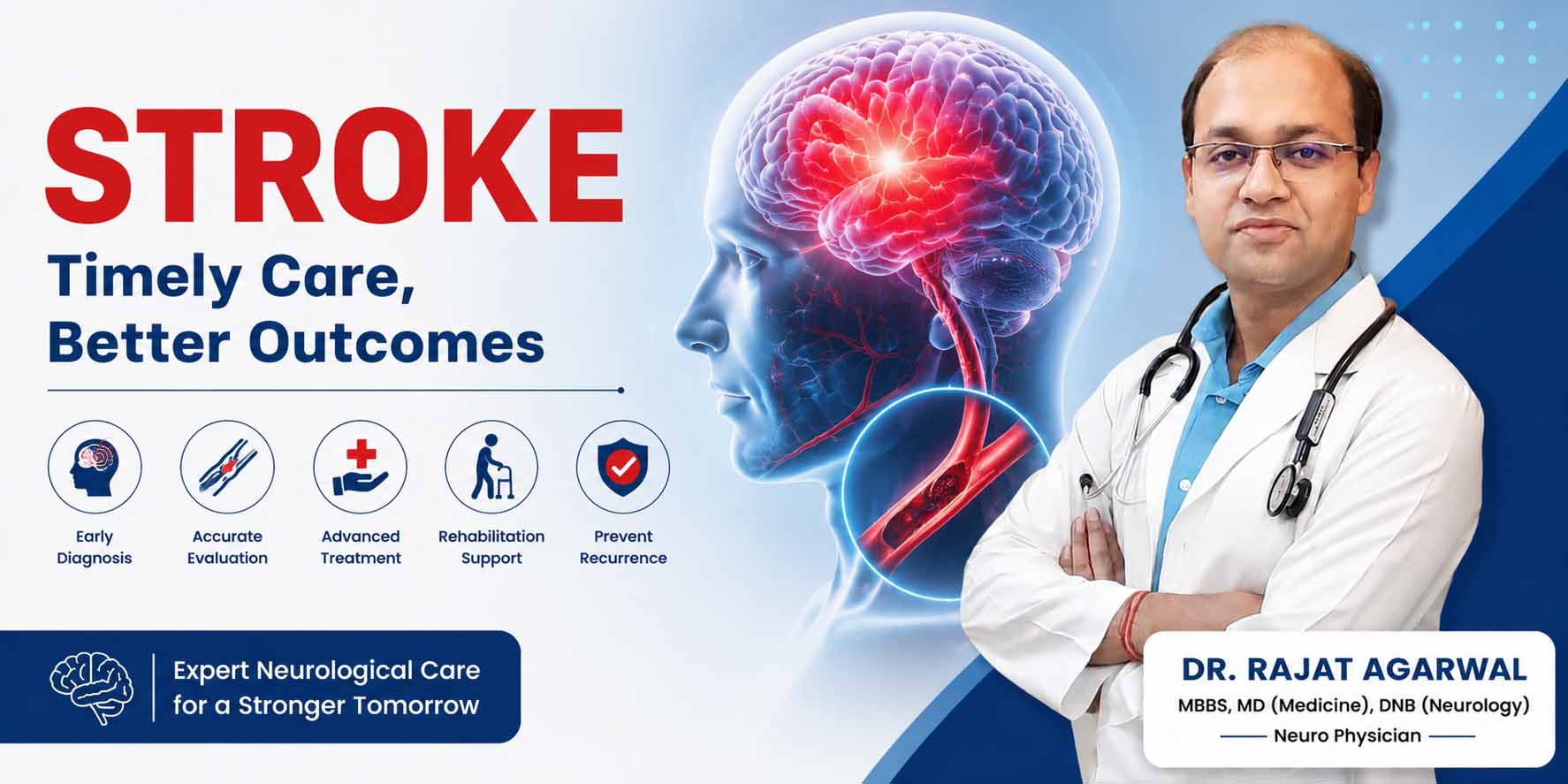
Stroke Treatment by Dr. Rajat Agarwal
A stroke is a serious medical emergency that occurs when the blood supply to a part of the brain is interrupted or reduced, depriving brain tissue of oxygen and nutrients. Without immediate medical attention, brain cells begin to die within minutes, making early diagnosis and treatment essential for reducing complications and improving recovery.
Dr. Rajat Agarwal, an experienced Neuro Physician in Haldwani, provides comprehensive evaluation, diagnosis, treatment, and long-term management of stroke patients. With a patient-centered approach and advanced neurological expertise, he focuses on minimizing brain damage, preventing recurrent strokes, and helping patients regain their independence through personalized care.
What is a Stroke?
A stroke occurs when the brain does not receive enough blood flow due to a blocked or ruptured blood vessel. It is one of the leading causes of disability and can affect speech, movement, memory, balance, and other vital functions depending on the area of the brain involved.
Timely medical intervention significantly increases the chances of recovery and reduces the risk of permanent neurological damage.
Common Symptoms of Stroke
Seek immediate medical attention if you notice any of the following symptoms:
- Sudden weakness or numbness in the face, arm, or leg
- Weakness on one side of the body
- Difficulty speaking or understanding speech
- Sudden confusion
- Loss of balance or coordination
- Sudden dizziness or vertigo
- Blurred or loss of vision
- Severe headache with no known cause
- Difficulty walking
- Facial drooping
Remember the FAST warning signs:
- F – Face Drooping
- A – Arm Weakness
- S – Speech Difficulty
- T – Time to Seek Emergency Medical Care
Common Causes and Risk Factors
Several factors can increase the risk of stroke, including:
- High blood pressure (Hypertension)
- Diabetes
- High cholesterol
- Heart disease
- Smoking
- Obesity
- Physical inactivity
- Excessive alcohol consumption
- Advanced age
- Family history of stroke
Managing these risk factors can significantly reduce the chances of developing a stroke.
Diagnosis
Dr. Rajat Agarwal performs a thorough neurological assessment and coordinates appropriate investigations to determine the cause and severity of the stroke.
The diagnostic process may include:
- Comprehensive neurological examination
- Brain imaging (CT Scan or MRI)
- Blood investigations
- ECG and cardiac evaluation
- Carotid artery assessment
- Additional neurological investigations when required
Stroke Treatment
Treatment depends on the type and severity of the stroke.
Dr. Rajat Agarwal provides:
- Accurate neurological evaluation
- Early diagnosis and treatment planning
- Medication management
- Risk factor control
- Secondary stroke prevention
- Rehabilitation guidance
- Long-term neurological follow-up
- Lifestyle modification counseling
The goal is to improve recovery, restore function, and prevent future strokes.
Stroke Rehabilitation
Recovery after a stroke varies from person to person. Early rehabilitation plays an important role in improving mobility, speech, coordination, and daily functioning.
Rehabilitation may include:
- Physical rehabilitation
- Speech therapy guidance
- Occupational therapy
- Balance and coordination exercises
- Cognitive rehabilitation
- Emotional and psychological support
Why Choose Dr. Rajat Agarwal?
- Experienced Neuro Physician
- Comprehensive Stroke Evaluation
- Personalized Treatment Plans
- Focus on Early Diagnosis
- Long-Term Follow-Up Care
- Evidence-Based Neurological Treatment
- Compassionate Patient Care
- Advanced Neurological Expertise
When Should You Consult Dr. Rajat Agarwal?
Consult Dr. Rajat Agarwal if you or your loved one experiences:
- Sudden weakness or paralysis
- Speech difficulties
- Persistent numbness
- Sudden vision changes
- Difficulty walking
- Balance problems
- Recurrent transient ischemic attacks (Mini Stroke)
- Previous history of stroke requiring follow-up
Early diagnosis and timely neurological care can make a significant difference in recovery and quality of life.