Understanding Migraine
-
 By Dr. Rajat Agarwal
-
 July 18, 2026
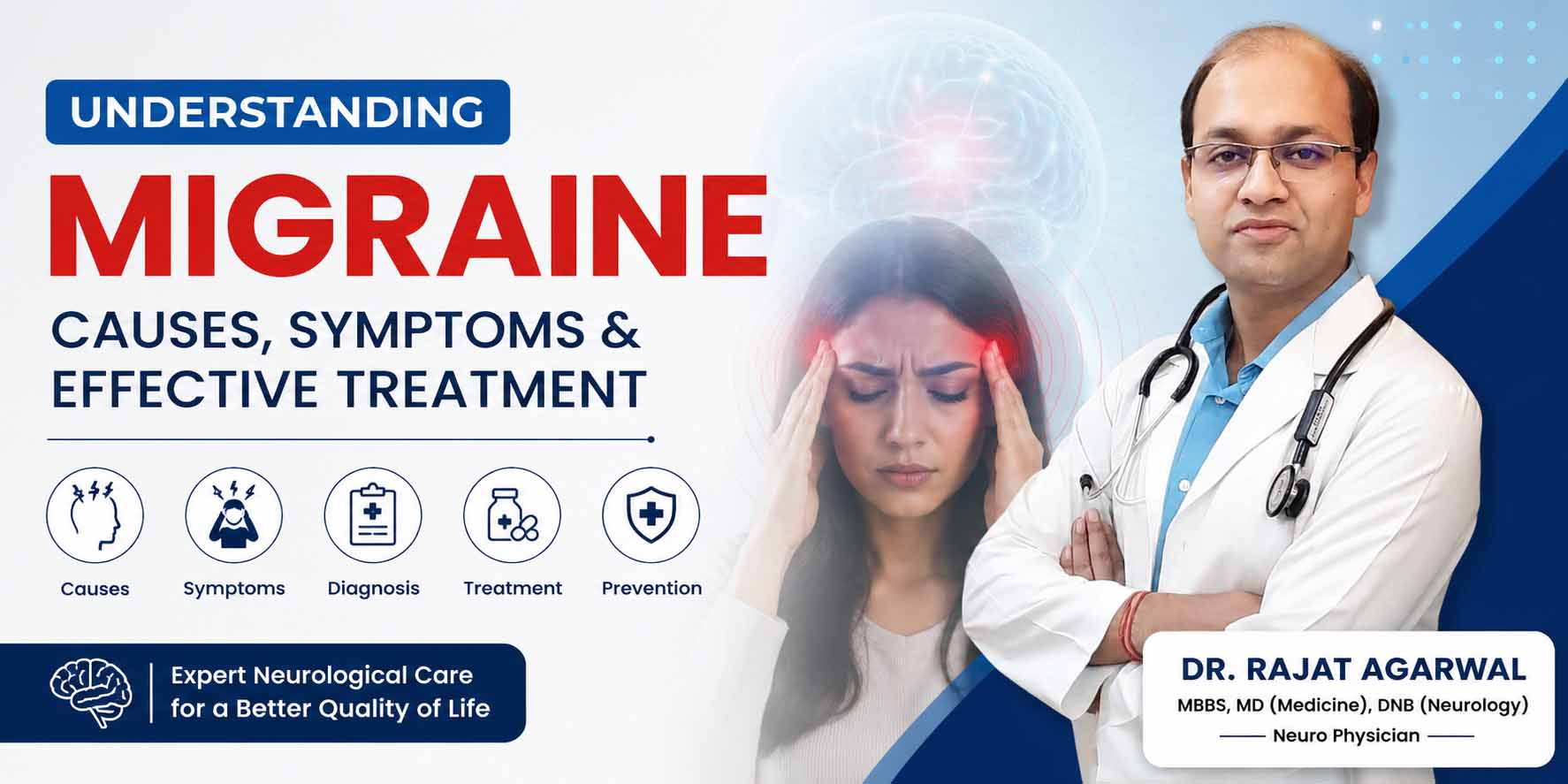
Understanding Migraine – Causes, Symptoms & Effective Treatment
Introduction
Migraine is more than just a headache—it is a complex neurological condition that can significantly affect a person's daily life, work performance, and overall well-being. Unlike ordinary headaches, migraines often cause intense throbbing pain accompanied by symptoms such as nausea, vomiting, and sensitivity to light and sound.
Millions of people worldwide suffer from migraines, yet many continue to ignore their symptoms or rely solely on temporary pain relief medications. Understanding the causes, symptoms, and treatment options can help patients manage migraines effectively and improve their quality of life.
What is a Migraine?
A migraine is a neurological disorder characterized by recurrent episodes of moderate to severe headache, usually affecting one side of the head. Migraine attacks can last anywhere from a few hours to several days and may interfere with routine activities.
Some individuals experience warning signs known as an aura before the headache begins, while others may experience symptoms without any warning.
Common Causes of Migraine
The exact cause of migraines is not completely understood, but researchers believe they result from abnormal brain activity affecting nerve signals, blood vessels, and chemicals in the brain.
Several factors can trigger migraine attacks, including:
1. Stress and Anxiety
Emotional stress is one of the most common migraine triggers. Work pressure, lack of sleep, and anxiety can increase the likelihood of attacks.
2. Hormonal Changes
Hormonal fluctuations during menstruation, pregnancy, or menopause can trigger migraines, especially in women.
3. Sleep Disturbances
Both insufficient sleep and excessive sleep may contribute to migraine episodes.
4. Certain Foods and Drinks
Common dietary triggers include:
- Chocolate
- Cheese
- Processed foods
- Caffeine
- Alcohol
- Artificial sweeteners
5. Dehydration
Not drinking enough water can lead to headaches and trigger migraines.
6. Bright Lights and Loud Sounds
Exposure to strong lights, flashing screens, or loud noises may provoke migraine attacks.
7. Weather Changes
Sudden changes in temperature, humidity, or atmospheric pressure can act as triggers for some individuals.
8. Strong Smells
Perfumes, smoke, chemicals, and strong odors may trigger symptoms in sensitive individuals.
Symptoms of Migraine
Migraine symptoms can vary from person to person, but commonly include:
- Severe throbbing or pulsating headache
- Pain on one side of the head
- Nausea and vomiting
- Sensitivity to light (photophobia)
- Sensitivity to sound (phonophobia)
- Blurred vision
- Dizziness or vertigo
- Fatigue and weakness
- Difficulty concentrating
- Neck stiffness
Some patients may experience an aura, which can include:
- Flashing lights
- Blind spots
- Tingling sensations in the face or hands
- Difficulty speaking
- Temporary vision disturbances
Types of Migraine
Migraine Without Aura
The most common type of migraine characterized by severe headache without warning signs.
Migraine With Aura
Patients experience visual or sensory symptoms before the headache starts.
Chronic Migraine
Headaches occur on 15 or more days per month for at least three months.
Vestibular Migraine
Primarily associated with dizziness, vertigo, and balance problems.
Hemiplegic Migraine
A rare type of migraine that can cause temporary weakness on one side of the body.
When Should You See a Neurologist?
Consult a neurologist if you experience:
- Frequent or severe headaches
- Headaches that worsen over time
- Sudden onset of severe headache
- Migraine associated with weakness or numbness
- Vision changes or speech difficulties
- Headaches that interfere with daily activities
- Headaches not responding to medications
Early evaluation helps identify underlying causes and prevents complications.
Effective Treatment Options for Migraine
Migraine treatment focuses on relieving symptoms and preventing future attacks.
1. Lifestyle Modifications
Simple lifestyle changes can significantly reduce migraine frequency:
- Maintain regular sleep schedules
- Stay hydrated
- Exercise regularly
- Avoid known triggers
- Manage stress effectively
- Eat balanced meals on time
2. Medications for Acute Migraine
Doctors may prescribe medications to relieve symptoms during an attack, including pain relievers and migraine-specific medications.
3. Preventive Medications
Patients with frequent migraines may benefit from preventive treatment to reduce the number and severity of attacks.
4. Stress Management
Yoga, meditation, breathing exercises, and relaxation techniques can help control migraine triggers related to stress.
5. Personalized Neurological Care
A neurologist can identify individual triggers and create a customized treatment plan based on your symptoms and medical history.
Tips to Prevent Migraine Attacks
- Keep a headache diary to identify triggers.
- Avoid skipping meals.
- Limit caffeine intake.
- Get adequate sleep every night.
- Reduce screen time if it triggers symptoms.
- Practice relaxation techniques regularly.
- Stay physically active.
Can Migraines Be Cured?
While there is currently no permanent cure for migraines, most patients can successfully control their symptoms and reduce the frequency of attacks with proper medical treatment and lifestyle changes.
Many people experience significant improvement in their quality of life after receiving expert neurological care.
Conclusion
Migraine is a serious neurological condition that should not be ignored. If you experience frequent headaches, nausea, dizziness, or sensitivity to light and sound, seeking medical advice can help identify the cause and provide effective treatment options.
Early diagnosis and proper management can prevent migraines from affecting your daily activities and overall health.
If you or your loved ones are suffering from persistent migraines or recurring headaches, consult an experienced neurologist for expert evaluation and personalized treatment.