Parkinson's Disease Treatment
-
 By Dr. Rajat Agarwal
-
 July 13, 2026
Parkinson's Disease Treatment
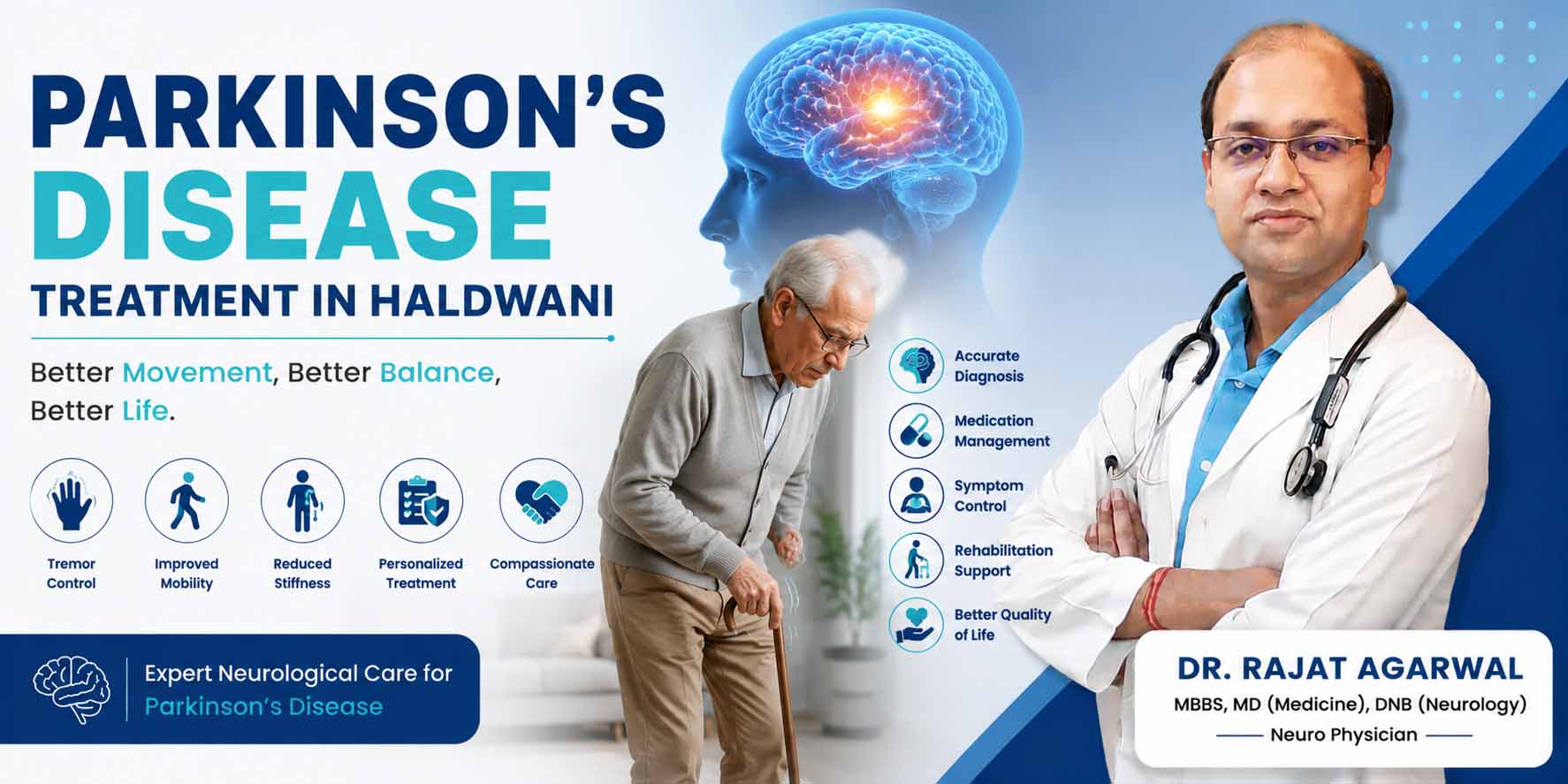
Parkinson's Disease Treatment by Dr. Rajat Agarwal
Parkinson's disease is a progressive neurological disorder that primarily affects movement, balance, and coordination. It develops gradually and can make everyday activities such as walking, writing, speaking, and performing routine tasks increasingly difficult. Although Parkinson's disease cannot be cured, early diagnosis and appropriate treatment can effectively manage symptoms and help patients maintain an active and independent lifestyle.
Dr. Rajat Agarwal, an experienced Neuro Physician in Haldwani, specializes in the diagnosis and management of Parkinson's disease and other movement disorders. Through personalized treatment plans, medication management, and long-term follow-up, he helps patients improve mobility, reduce symptoms, and enhance their quality of life.
What is Parkinson's Disease?
Parkinson's disease is a chronic neurological condition caused by the gradual loss of dopamine-producing nerve cells in the brain. Dopamine is a chemical messenger responsible for smooth and coordinated muscle movements. As dopamine levels decrease, patients experience difficulty controlling their movements and maintaining balance.
The condition progresses slowly, making early recognition and treatment essential for better symptom control.
Common Symptoms of Parkinson's Disease
Symptoms may develop gradually and vary from person to person. Common signs include:
- Tremors or shaking, especially in the hands
- Slowness of movement (Bradykinesia)
- Difficulty walking
- Poor balance and frequent falls
- Stooped posture
- Soft or slow speech
- Reduced facial expressions (Masked Face)
- Small handwriting (Micrographia)
- Difficulty swallowing
- Fatigue
- Sleep disturbances
- Depression and anxiety
- Memory and concentration problems in later stages
Causes and Risk Factors
The exact cause of Parkinson's disease is not fully understood, but several factors may contribute, including:
- Increasing age
- Family history
- Genetic mutations
- Environmental toxin exposure
- Brain cell degeneration
- Certain neurological conditions
While Parkinson's is more common in older adults, younger individuals can also develop the disease.
Diagnosis of Parkinson's Disease
There is no single test for Parkinson's disease. Diagnosis is based on a detailed neurological evaluation.
Dr. Rajat Agarwal performs:
- Comprehensive neurological examination
- Medical history assessment
- Evaluation of movement and balance
- Assessment of tremors and muscle rigidity
- Brain imaging (MRI or CT Scan) when required
- Additional neurological investigations to rule out other disorders
Early diagnosis helps initiate treatment before symptoms significantly affect daily life.
Parkinson's Disease Treatment
Treatment focuses on controlling symptoms, improving movement, and maintaining independence.
Dr. Rajat Agarwal provides:
- Comprehensive neurological evaluation
- Personalized medication management
- Long-term symptom monitoring
- Lifestyle modification guidance
- Exercise and rehabilitation recommendations
- Balance and mobility improvement strategies
- Patient and caregiver education
- Regular follow-up care
Each treatment plan is customized according to the patient's symptoms, disease stage, and overall health.
Lifestyle Tips for Parkinson's Patients
Healthy lifestyle habits can improve symptom control and overall well-being.
Patients are advised to:
- Exercise regularly
- Follow prescribed medications consistently
- Eat a balanced and nutritious diet
- Maintain proper hydration
- Practice balance and flexibility exercises
- Ensure adequate sleep
- Participate in physical therapy when recommended
- Stay mentally active through reading and cognitive activities
- Attend regular neurological follow-up appointments
Why Choose Dr. Rajat Agarwal for Parkinson's Treatment?
- Experienced Neuro Physician
- Expertise in Movement Disorders
- Comprehensive Neurological Assessment
- Personalized Treatment Plans
- Evidence-Based Medical Care
- Patient-Centered Approach
- Long-Term Disease Management
- Compassionate and Continuous Care
When Should You Consult Dr. Rajat Agarwal?
You should seek neurological evaluation if you experience:
- Persistent hand tremors
- Slowness in daily movements
- Muscle stiffness
- Difficulty maintaining balance
- Frequent falls
- Changes in handwriting
- Soft or unclear speech
- Difficulty walking
- Symptoms affecting daily activities
Early consultation can help slow disease progression and improve quality of life.