Neurological Disorders
-
 By Dr. Rajat Agarwal
-
 July 13, 2026
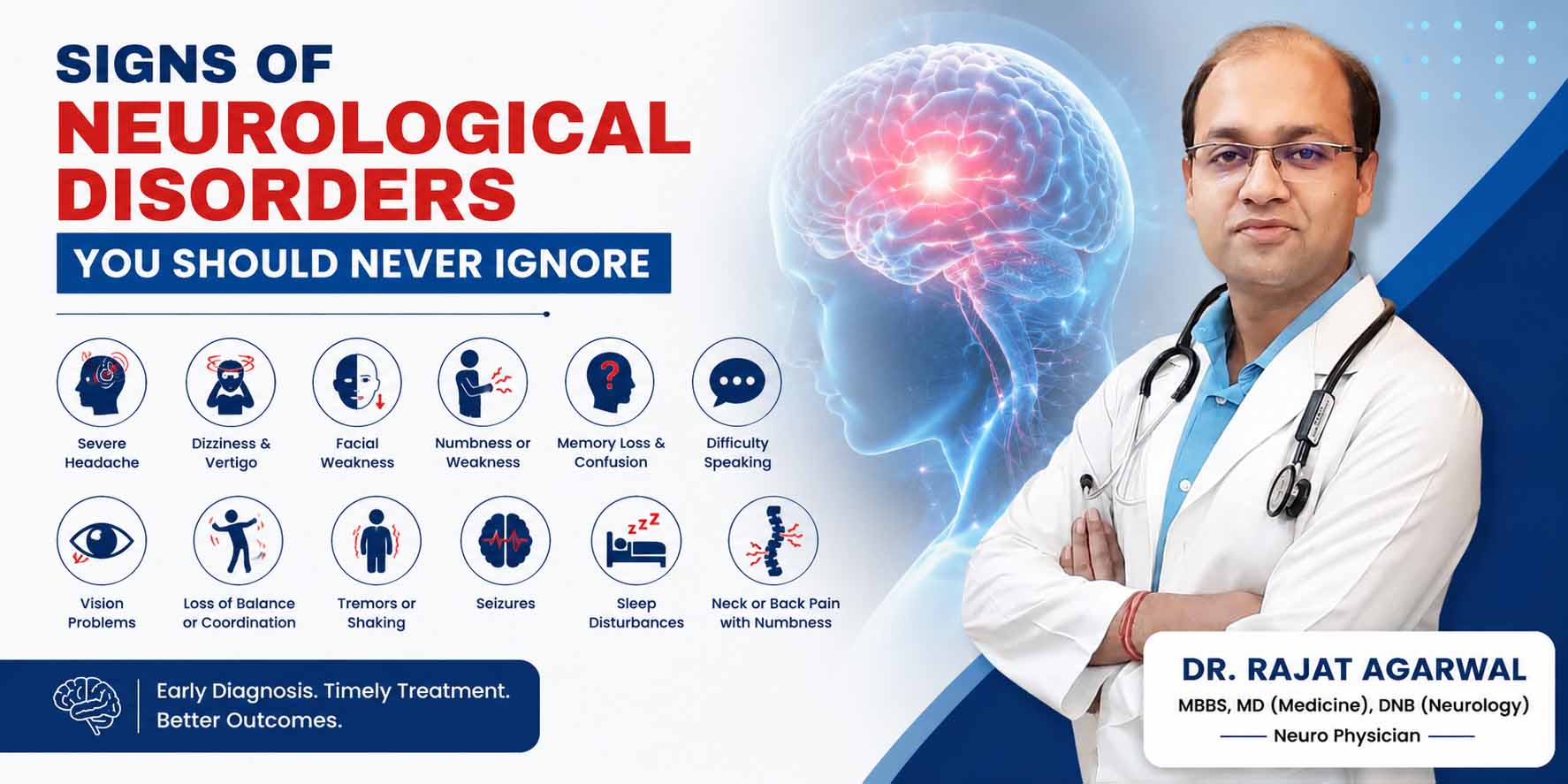
Signs of Neurological Disorders You Should Never Ignore
Introduction
Our nervous system controls almost every function in the body, from movement and sensation to memory and thinking. When something affects the brain, spinal cord, or nerves, the body often sends warning signals. Unfortunately, many people ignore these symptoms, assuming they are due to stress, aging, or fatigue.
Recognizing the early signs of neurological disorders can lead to timely diagnosis, effective treatment, and better outcomes. Ignoring these symptoms may allow underlying conditions to worsen over time.
Here are some important neurological warning signs that should never be ignored.
1. Persistent or Severe Headaches
Occasional headaches are common, but frequent, severe, or unusual headaches may indicate an underlying neurological condition.
Seek medical attention if your headache:
- Occurs suddenly and intensely
- Becomes more frequent over time
- Is associated with vomiting
- Worsens with coughing or bending
- Is accompanied by weakness or vision changes
Conditions such as migraines, brain infections, stroke, or other neurological disorders may present with headaches.
2. Dizziness and Vertigo
Feeling dizzy occasionally may not be serious, but repeated episodes of dizziness, spinning sensations, or balance problems should be evaluated.
Persistent vertigo can be associated with:
- Inner ear disorders
- Vestibular migraines
- Stroke
- Neurological diseases affecting balance
3. Weakness or Numbness in the Arms or Legs
Sudden or progressive weakness, numbness, or tingling in the limbs should never be ignored.
These symptoms may indicate:
- Stroke
- Nerve compression
- Peripheral neuropathy
- Multiple sclerosis
- Spinal cord disorders
Immediate medical attention is particularly important if symptoms appear suddenly on one side of the body.
4. Difficulty Speaking or Understanding Speech
Trouble speaking clearly, finding words, or understanding conversations can be a warning sign of serious neurological conditions.
Potential causes include:
- Stroke
- Brain injury
- Neurological diseases affecting language centers
If speech difficulties occur suddenly, emergency medical care is essential.
5. Memory Loss and Confusion
Occasional forgetfulness is normal, but persistent memory problems or confusion should be evaluated by a specialist.
Warning signs include:
- Frequently forgetting recent events
- Difficulty recognizing familiar people or places
- Trouble performing routine tasks
- Increasing confusion
These symptoms may be associated with dementia, Alzheimer's disease, or other neurological conditions.
6. Seizures or Episodes of Loss of Consciousness
A seizure can involve shaking movements, staring spells, confusion, or temporary loss of awareness.
Even a single unexplained seizure requires neurological evaluation to determine the underlying cause and prevent future episodes.
7. Tremors or Uncontrolled Movements
Shaking hands, involuntary movements, or muscle stiffness may indicate movement disorders such as Parkinson's disease or other neurological conditions.
Early diagnosis often leads to better symptom control and improved quality of life.
8. Vision Problems
Neurological disorders can affect vision in several ways, including:
- Double vision
- Blurred vision
- Loss of vision
- Visual disturbances
Sudden vision changes require prompt medical attention.
9. Difficulty Walking or Maintaining Balance
Problems with coordination, frequent falls, or an unsteady gait may signal disorders affecting the brain, nerves, muscles, or spinal cord.
Possible causes include:
- Parkinson's disease
- Stroke
- Cerebellar disorders
- Peripheral neuropathy
10. Persistent Neck or Back Pain with Numbness
Neck or back pain associated with tingling, numbness, or weakness may indicate nerve compression or spinal disorders.
Early treatment can help prevent permanent nerve damage and improve recovery.
11. Facial Weakness or Facial Drooping
Sudden facial weakness or drooping may occur due to:
Possible causes include:
- Stroke
- Bell's palsy
- Facial nerve disorders
Any sudden facial asymmetry should be evaluated immediately.
12. Sleep Disturbances and Excessive Daytime Sleepiness
Neurological conditions can affect sleep patterns and brain function.
Symptoms such as:
- Excessive daytime sleepiness
- Sudden sleep attacks
- Abnormal movements during sleep
- Difficulty sleeping
may require neurological assessment.
When Should You See a Neurologist?
Consult a neurologist if you experience:
- Frequent headaches or migraines
- Recurrent dizziness or vertigo
- Numbness or weakness
- Memory problems
- Tremors
- Seizures
- Speech difficulties
- Balance issues
- Persistent nerve pain
Early diagnosis often leads to better treatment outcomes and improved quality of life.
Why Early Diagnosis Matters
Many neurological disorders can be effectively managed when identified early. Delaying medical attention may increase the risk of complications and long-term disability.
Modern neurological care offers advanced diagnostic techniques and treatment options that can significantly improve patient outcomes.
Conclusion
Your body often provides warning signs when something is wrong with the nervous system. Persistent headaches, dizziness, numbness, weakness, memory problems, and seizures should never be ignored.
Seeking timely evaluation from an experienced neurologist can help identify the cause, begin appropriate treatment, and protect your long-term neurological health.
If you experience any of these symptoms, consult a qualified neurologist for expert advice and comprehensive care.